
The Montessori Prepared Environment

January 9, 2023

In Montessori, we talk a lot about the “prepared environment.” Really, though, this concept of a prepared environment isn’t limited to Montessori. In fact, from the earth’s biosphere offering an array of support for life, to the fragrant and colorful flowers existing to lure pollinators, to a woman’s uterus preparing each month for the implantation of a fertilized egg – prepared environments are all around us!


A prepared environment has three essential purposes:


  1.  to offer protection, 
  2. to provide nourishment, and 
  3. to stimulate growth. 


In Montessori, a prepared environment is a place for children that is specially designed to appeal to their sensitive periods for learning, as well as their fundamental human tendencies. When designing these prepared spaces for children, we take into consideration how to ensure children feel protected and nourished, so they can reach their potential. Basically, the Montessori prepared environment is a place where children can feel at home as they develop their inner selves and outer skills.


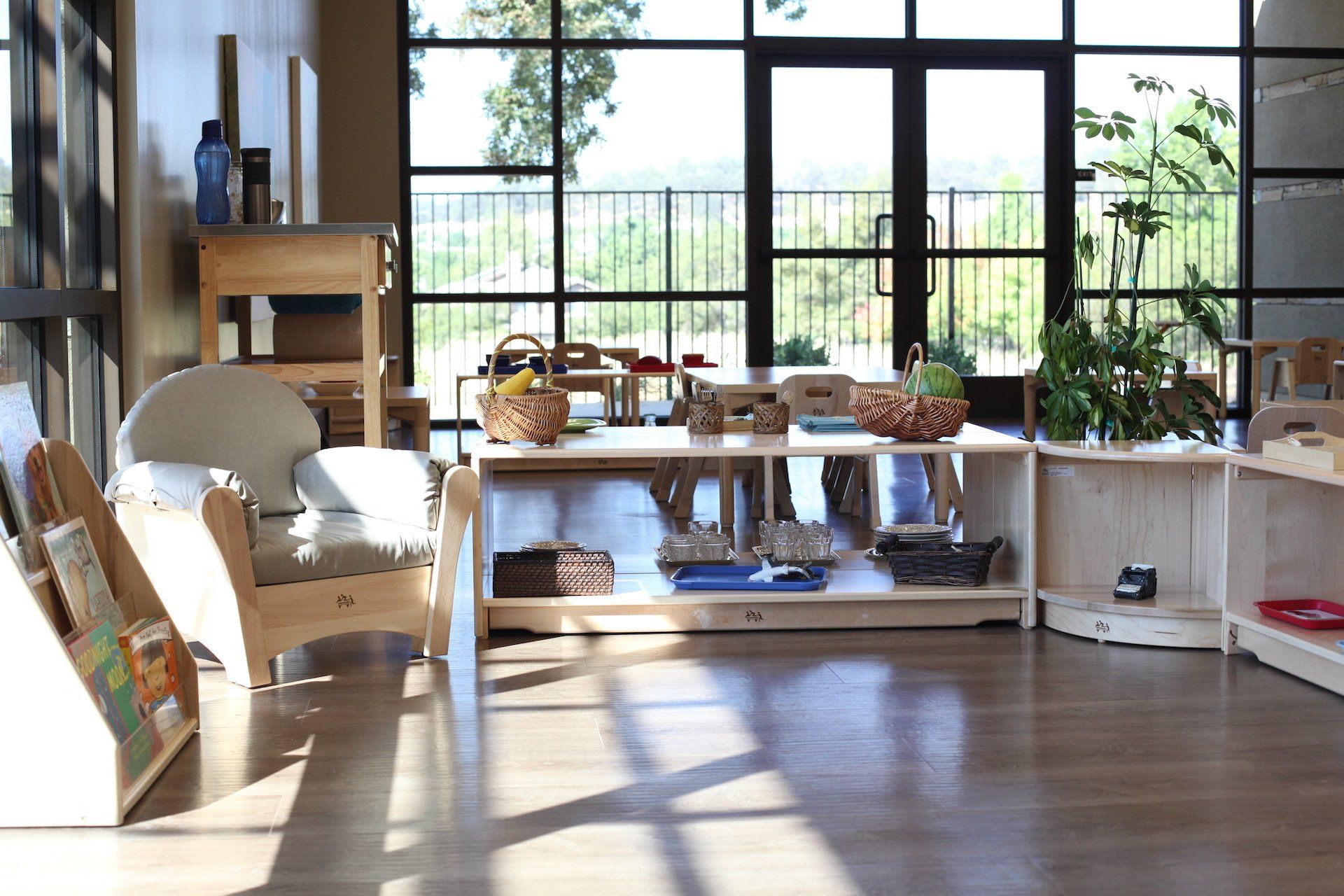
One of the ways we offer children safe, home-like learning environments, is through our attentiveness to how the physical space is set up to meet children’s developmental needs. The classrooms have small, easy-to-move tables and chairs, as well as plenty of windows that let in bright, inviting light. Large open floor space allows children to work on the floor on rugs and move freely about the classroom. Low, open shelves display orderly arrangements of beautiful materials which invite children to engage with an array of learning activities. 


The materials on the shelves are quite aesthetically appealing and have been developed out of trial and observation in schools all over the world. The beauty of the materials and the classroom appeals to children’s development of an aesthetic sense, while the arrangement of materials from concrete to abstract provides children with a solid sense of order. 


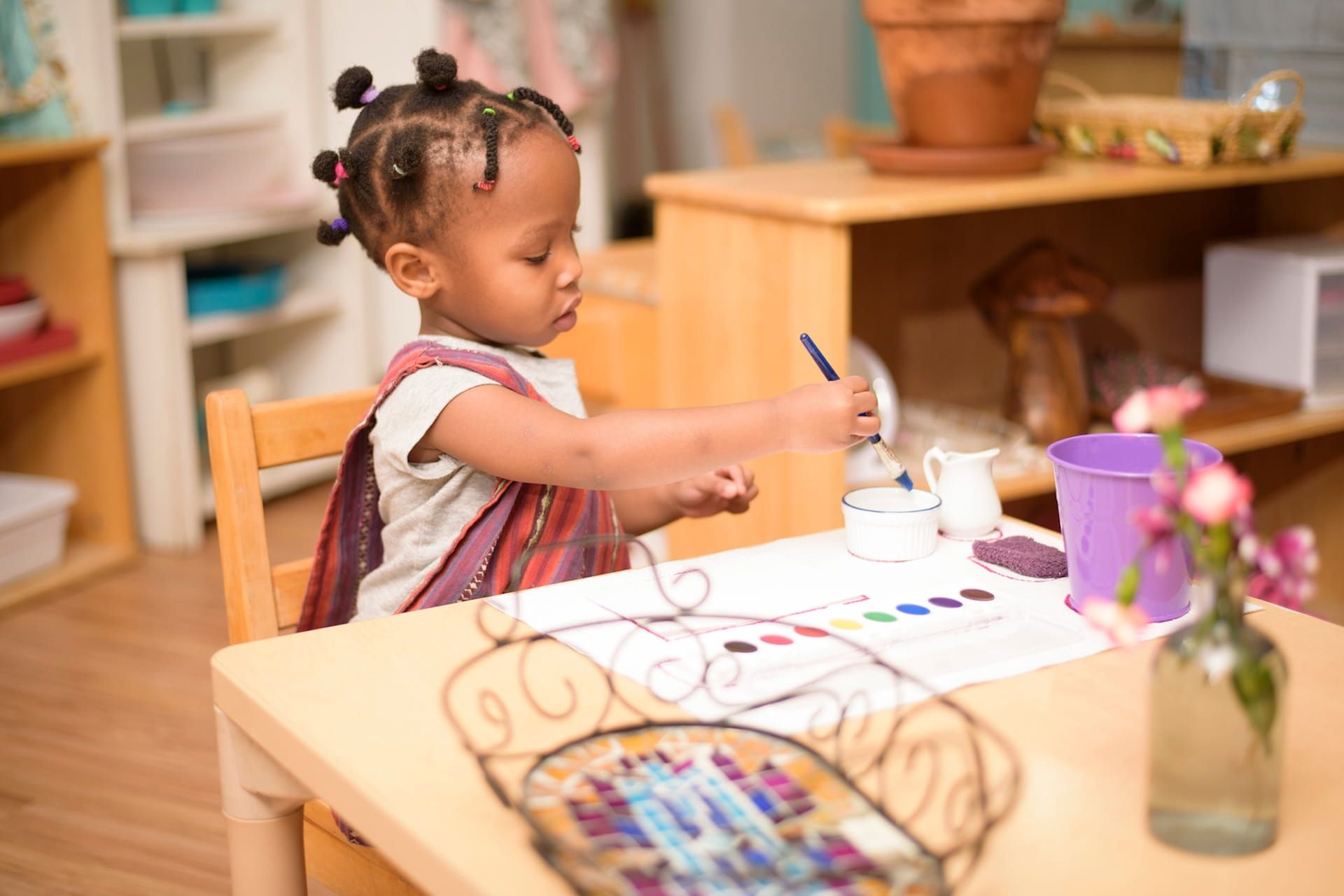
In addition to being beautiful, the materials in the environment are real and purposeful. Containers for items even offer different textures and sensorial experiences. Because the materials are authentic, they offer children clear guidelines regarding use and misuse. Fragile items help children learn how to handle items with control and care. Plus, having access to beautiful, breakable treasures conveys an essential message of goodwill and trust.


In the beginning, adults assist children in getting their bearings in the classroom and teach the precise use of each material. The children then have the freedom to choose what they do and to focus for long periods of time. 


Although adults are not the focal point in Montessori classrooms, adults are of prime importance. While they may have an outward appearance of passivity, the adults are acutely alert to what is happening in the classroom community. In addition to this presence and awareness, adults in Montessori classrooms must prepare themselves in profound ways. They have extensive intellectual and practical training to be able to link children with different aspects of the learning environment as well as with the breadth and depth of educational materials. Because the adults model how to have a peaceful environment where everyone is respected and able to work without distraction, they also must prepare themselves on a personal and spiritual level. 


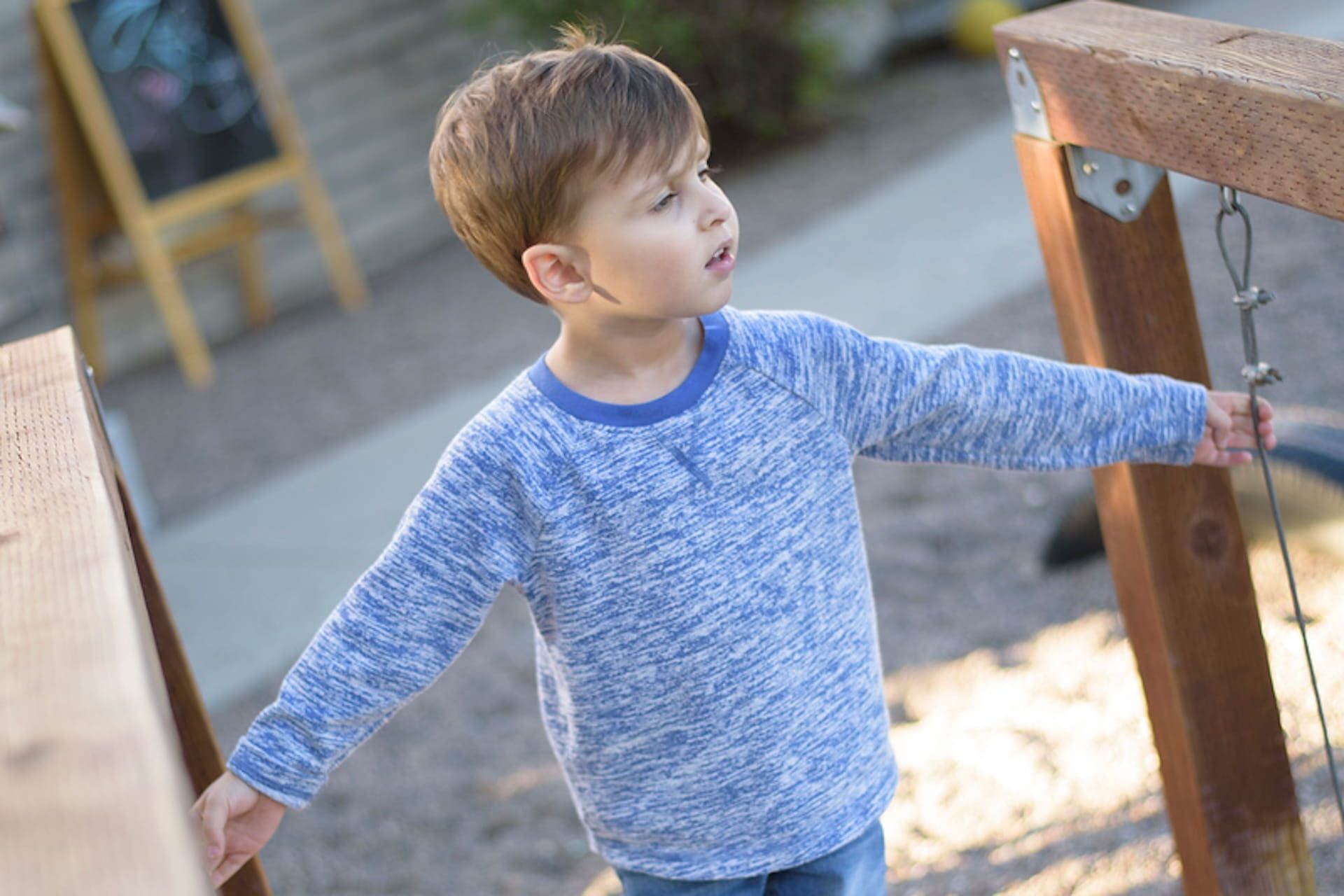
In addition to this psychological safety, Montessori prepared environments also focus on the importance and value of living things and outdoor spaces so children can keep and develop their connection to nature. Ideally, the classroom includes a garden area in which children can sow seeds, care for living things, and participate in harvesting the fruits of their work. The indoor and outdoor spaces often blend together with plants and animals as integral aspects of the classroom. In Montessori, we consider this connection to nature to be an essential part of education.


The connection to nature both in and out of doors, the arrangement of open space with child-sized furniture, the ordered and aesthetic materials, and the centrality of children with adults offering background support, all provide children with the protection and nourishment they need to develop independence and active engagement. 


Children in Montessori prepared environments love their learning spaces! Come visit our school to see how the classrooms appeal to children on so many levels as they engage with their community and construct their understanding of the world.

You might also like
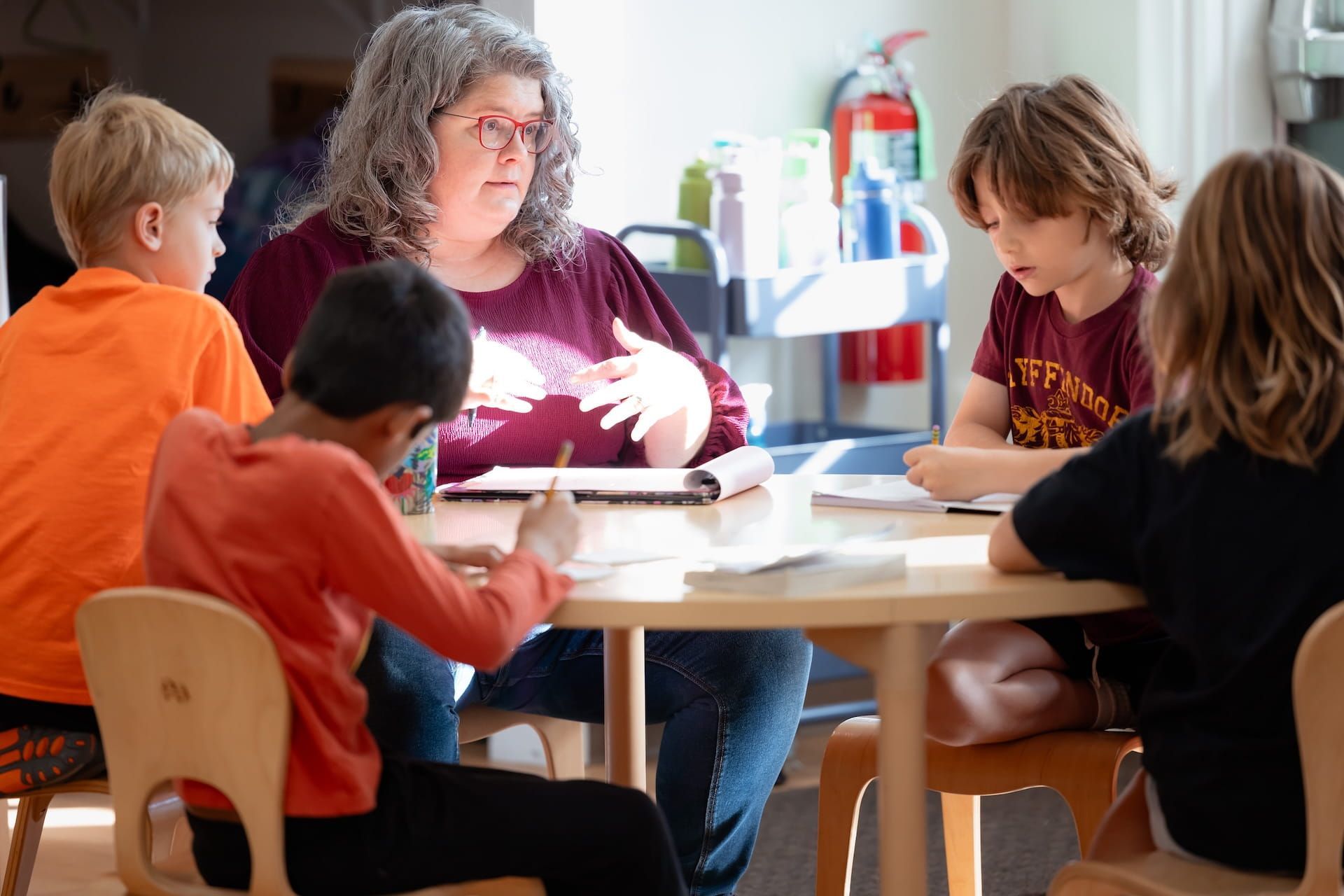
Teacher guiding children working together at table in Montessori classroom
May 11, 2026
See how Montessori timelines make abstract time tangible for children, building historical thinking, imagination, and inner order through hands-on work.
Child exploring outdoor Montessori environment with hands-on activity
May 4, 2026
Discover how Montessori education nurtures children's deepest human needs — from exploration and meaningful work to belonging and spiritual growth.
April 27, 2026
In Part One of this series, we began exploring the eight Montessori principles that Dr. Angeline Stoll Lillard examines in her landmark book, Montessori: The Science Behind the Genius . As we saw, what makes these principles so compelling is that Dr. Maria Montessori's intuitions about children were a precursor to what decades of developmental science have since confirmed about how humans actually learn. In this second and final installment, we pick up where we left off, examining the remaining principles and the research that brings them to life. Whether you're a parent, an educator, or simply someone curious about what effective learning really looks like, these insights offer a fascinating window into the remarkable alignment between one woman's careful observations over a century ago and the science we have today. If you haven’t already, be sure to check out the previous four principles: Movement and Learning Are Deeply Entwined Choice Improves Both Learning and Well-Being Children Learn Best When They're Genuinely Interested Rewards Undermine the Motivation They're Meant to Build PRINCIPLE FIVE: Children Learn Powerfully from Each Other When you walk into a Montessori classroom, you’ll notice that children are almost always working near or directly with other children. Peer learning is one of the most effective forms of learning, and Montessori classrooms are deliberately structured to make it a constant. Much of this learning happens through observation. When a child watches a slightly older classmate work through challenging material, they're absorbing the technique and the possibility. They begin to see what they can do! Peer observation often drives a spontaneous "explosion" of writing or number awareness, spreading through a class (e.g., one child suddenly writing everywhere, then several more following). The mixed-age grouping in Montessori classrooms amplifies this. Younger children always have a visible horizon of what's coming next. Older children consolidate their own understanding by helping younger ones (which is one of the most effective learning strategies known). And the large, stable class community means children have time to build genuine relationships and observe one another across many contexts over several years. PRINCIPLE SIX: Meaningful Context Makes Learning Richer and More Lasting Children remember far more when what they're learning is connected to something real and purposeful. What the Research Shows In one study, three-year-olds were asked to memorize lists of items. When the lists were presented as shopping lists for a pretend store, the children remembered twice as many items as those who were simply told to memorize a list. Montessori education is built on this principle. Practical life activities such as cooking, cleaning, caring for plants and animals teach children that the skills they are learning connect to the real world. The Montessori curriculum is deliberately integrated. Vocabulary develops alongside sensorial exploration. Math concepts are entwined with concrete materials that make abstract ideas visible. Knowledge in one area consistently links to knowledge in others. This is why Montessori materials are not isolated exercises but part of a spiral curriculum that returns to the same ideas with greater depth and complexity as children grow. PRINCIPLE SEVEN: How Adults Interact with Children Shapes Everything The way an adult responds to a child's efforts has effects that ripple far beyond the moment. What the Research Shows Carol Dweck's research, now widely cited, demonstrated that a single sentence of feedback can set children on divergent trajectories. Children told "you must be smart" after succeeding at a problem later chose easier tasks, enjoyed them less, and performed worse after encountering difficulty. Children told "you must have worked hard" sought harder challenges, recovered from failure more readily, and improved their performance over time. The difference is in the delivery of one sentence! The implications are profound for how we talk to children about both their successes and their struggles. In a Montessori classroom, the adult’s role is carefully defined: to observe, to connect children to materials at the right moment, to step back when a child is productively engaged, and to step in only when something is genuinely unproductive or unsafe. This requires a great deal of precision and restraint. An adult who constantly intervenes, corrects, and directs trains children to look outward for approval. An adult who observes and offers at the right moment helps children learn to look inward. Consistency and long-term relationships also matter. The multi-age grouping in Montessori means that children spend multiple years with the same adults, building the kind of attachment and trust that research consistently links to stronger learning outcomes and healthier social-emotional development. PRINCIPLE EIGHT: Order in the Environment Supports Order in the Mind The Montessori classroom's distinctive aesthetic reflects a deep understanding of how the environment shapes cognition. What the Research Shows Research consistently shows that noise, clutter, and unpredictability are cognitively costly for children. When an environment is chaotic, children spend precious mental energy managing uncertainty rather than engaging in learning. Temporal order matters as much as spatial order. The three-hour uninterrupted work cycle (a hallmark of Montessori classrooms) gives children long enough stretches of focused time to move from initial engagement to deep concentration and, eventually, to the kind of absorbed flow that produces real intellectual development. Frequent interruptions (bells, transitions, whole-class pivots) train children to work in short bursts and to constantly reorient. The three-hour cycle allows children to go deep. Children in Montessori classrooms are also responsible for maintaining their environment by returning materials to their proper place, caring for plants and classroom spaces, and treating everything with consideration. This care builds the child's relationship to order as something they participate in creating rather than something imposed from the outside. Even noise levels matter in ways that go beyond comfort. What the Research Shows Research cited by Dr. Lillard found that across all ages, noise was one of the most consistently negative influences on cognitive development, partly because it interferes with the auditory discrimination that underpins both reading and vocabulary development. The quiet that characterizes a well-functioning Montessori classroom is the natural result of many children deeply absorbed in their own work. What makes Dr. Lillard’s work so valuable because it validates the Montessori method and gives the why behind practices that can otherwise seem puzzling from the outside. There are important reasons why Montessori teachers don't correct every error, why there are no gold stars, why the classroom is so quiet, and why children seem to do the same work over and over. This approach to education is deeply rooted in creating conditions in which children's natural drive to learn can develop as fully as possible! To learn more, visit our school here in Milwaukee. And let us know if you would like to borrow a copy of Montessori: The Science Behind the Genius by Dr. Angeline Stoll Lillard! It is one of the most research-grounded books available on Montessori education, and we highly recommend it for anyone who wants to understand the deeper logic of Montessori!
More Posts