
The Unfolding Child: Understanding the First Plane of Development (Ages 0–6)
Imagine education from a fresh, respectful perspective—one that views children not as empty vessels waiting to be filled, but as whole, capable individuals embarking on a lifelong journey of self-formation. From the moment of birth, children are driven by powerful internal forces that guide their growth and help them adapt to their unique time, place, and culture. This remarkable capacity for growth and adaptation is one of the most defining traits of our human species.
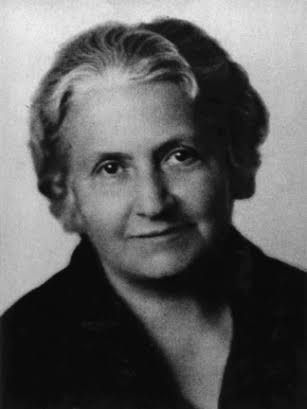
The Montessori approach is built upon this profound understanding of human development. Dr. Maria Montessori dedicated her life’s work to observing how children grow and change over time. Through her scientific observations, she identified Four Planes of Development, each with its own distinct characteristics, sensitive periods, and developmental needs.
In this four-part blog series, we’ll explore each of these four stages:
- Infancy / Early Childhood (Ages 0 to 6)
- Childhood (Ages 6 to 12)
- Adolescence (Ages 12 to 18)
- Maturity (Ages 18 to 24)
Today, we begin at the foundation: The First Plane of Development (Birth to Age Six), and explore how our prepared environments at North Shore Montessori School support young children as they construct themselves from the ground up.
The First Plane: An Era of Radical Transformation
The first plane of development is a period of extraordinary physical, psychological, and neurological growth. Newborns enter the world entirely dependent on adults for survival. Yet, within just six short years, these same infants are walking, conversing, reasoning, resolving social challenges, and asserting their independence with clear intellect and strong willpower.
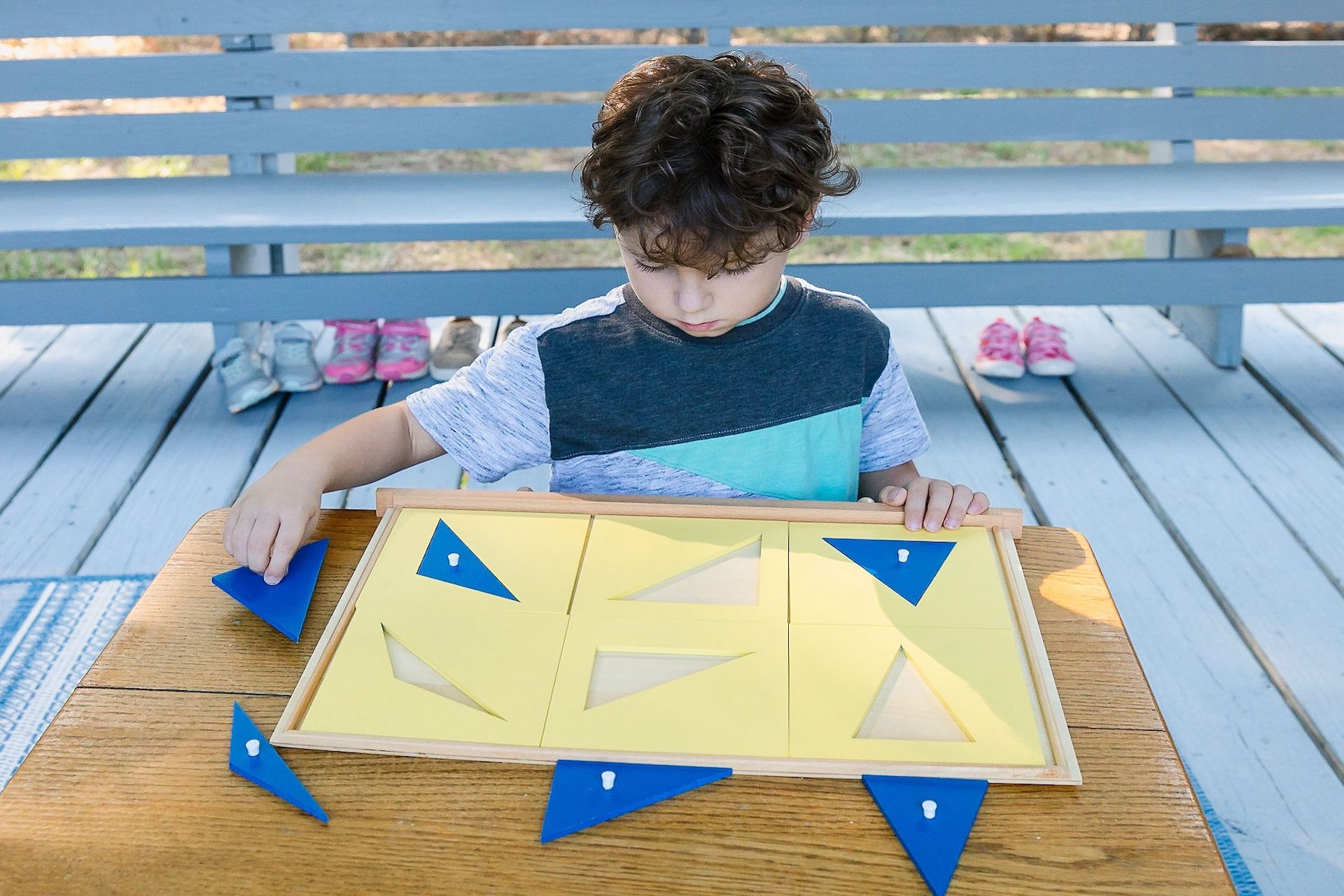
During this transformative stage, children absorb their surroundings effortlessly. When they are awake, their natural curiosity knows no bounds. They explore the world through their senses—touching, tasting, listening, looking, and manipulating objects in their environment to build an internal map of reality.
"Help Me Do It Myself!": The Conquest of Independence
The primary task of the child in the first plane is achieving functional independence. Young children have an innate desire to care for themselves and their surroundings. They naturally observe and imitate the actions of the adults around them.
The inner mantra of the child at this stage is simple and clear: "Help me do it myself!"
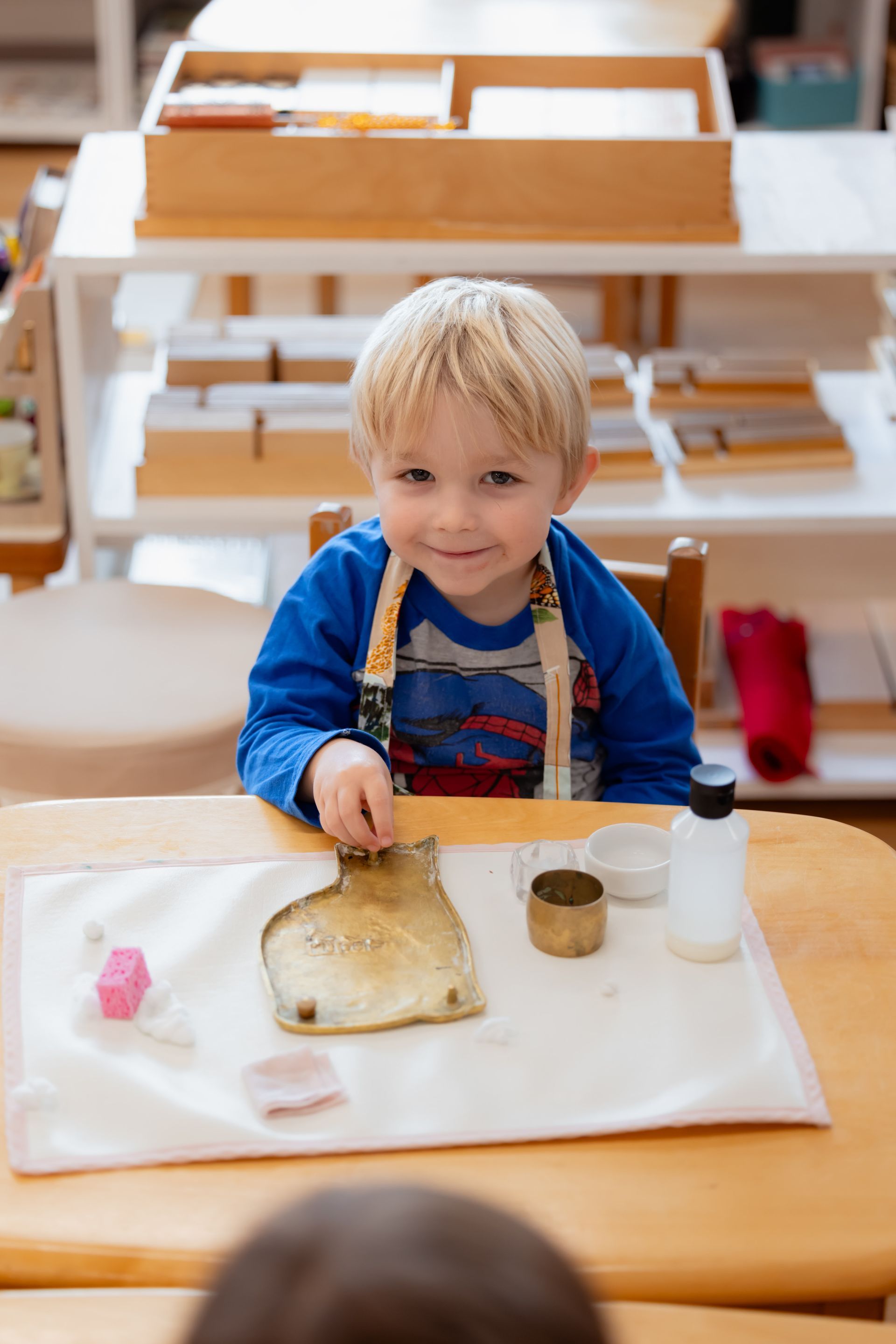
In our Toddler and Children’s House classrooms at North Shore Montessori School, we honor this drive through Practical Life activities. Children learn to pour their own water, dress themselves, prepare snacks, sweep the floor, and wash dishes. These tasks are not household chores; they are meaningful work that builds coordination, focus, self-worth, and authentic self-confidence.
Sensitive Periods: Windows of Opportunity
Dr. Montessori identified sensitive periods—transient developmental windows when a child is uniquely receptive to acquiring specific skills with ease and joy:
- Movement: Young children require continuous, purposeful movement to refine brain-body integration and spatial awareness.
- Order: Children crave environmental and temporal order to make sense of their world, learning where things belong, what happens next, and how their day flows.
- Language: This is a critical period for language acquisition, during which children absorb vocabulary, syntax, and cultural speech patterns without formal instruction.
Language and Physical Milestones
One of the most profound achievements during these first six years is spoken language. Research shows that even talking to a newborn stimulates neural pathways and vocal cord vibration. From having no spoken words at birth, a toddler often commands a vocabulary of roughly 200 words by age two—growing to an incredible 10,000 words or more by age six!
Physically, the growth is equally monumental. Children progress from immobility to crawling, running, balancing, carrying objects with precision, and mastering fine motor control. As parents and educators, our role is not to rush or restrict this movement, but to offer a safe, carefully prepared space that invites purposeful activity.
The Two Sub-Planes: Ages 0–3 and Ages 3–6
Montessori recognizes two distinct phases within the first plane of development:
1. Ages 0 to 3 (The Unconscious Absorbent Mind)
Development during the first three years is largely unconscious, guided by innate developmental drives. The infant and toddler absorb every detail of their environment—language, emotional tone, order, and physical structures—like a sponge, without filter or judgment. During this phase, adults best support the child by providing a safe, calm, and rich environment without imposing artificial expectations.
2. Ages 3 to 6 (The Conscious Absorbent Mind)
Between ages three and six, children move into a phase of conscious awareness. Willpower emerges, accompanied by a drive to organize, classify, and understand what they have absorbed. Children become conscious learners who actively sort patterns, categories, and sensory impressions through hands-on work with specialized classroom materials.
Social Development: From Solitary Play to Community Life
Social growth in the first plane undergoes a dramatic evolution:
- Under Age 3: Children form deep bonds with primary family members and caregivers. Social interaction consists mostly of solitary exploration and parallel play alongside peers.
- Ages 3 to 6: Children seek a wider social circle beyond the immediate family. They enter mixed-age classroom communities where they practice Grace and Courtesy—learning to take turns, offer assistance, respect a peer's workspace, and resolve small conflicts with empathy.
Creating a Supportive Environment at Home and School
Whether at home or in the classroom, providing an environment tailored to the child's developmental needs is essential. Key elements include:
- A Predictable Rhythm: Consistent daily routines build emotional security and reduce power struggles.
- Freedom to Explore Within Safe Limits: Accessible spaces allow children to move and choose work independently.
- A Language-Rich Atmosphere: Reading aloud, conversing respectfully, and using precise vocabulary support rapid language development.
- Participation in Practical Life: Involving children in real daily tasks (setting the table, folding laundry, watering plants) builds a strong sense of contribution and belonging.
Visit North Shore Montessori School
Understanding the first plane of development allows us to view young children with renewed wonder, patience, and respect. When we prepare an environment that matches their natural developmental drives, children thrive academically, socially, and emotionally.
We warmly invite you to visit North Shore Montessori School to observe our prepared Toddler and Children's House environments in action and see how our peaceful classrooms meet the needs of our youngest learners.
Schedule a tour with our admissions team today.
You might also like