Beyond the Lingo: A North Shore Montessori Dictionary for the Elementary Years and Beyond
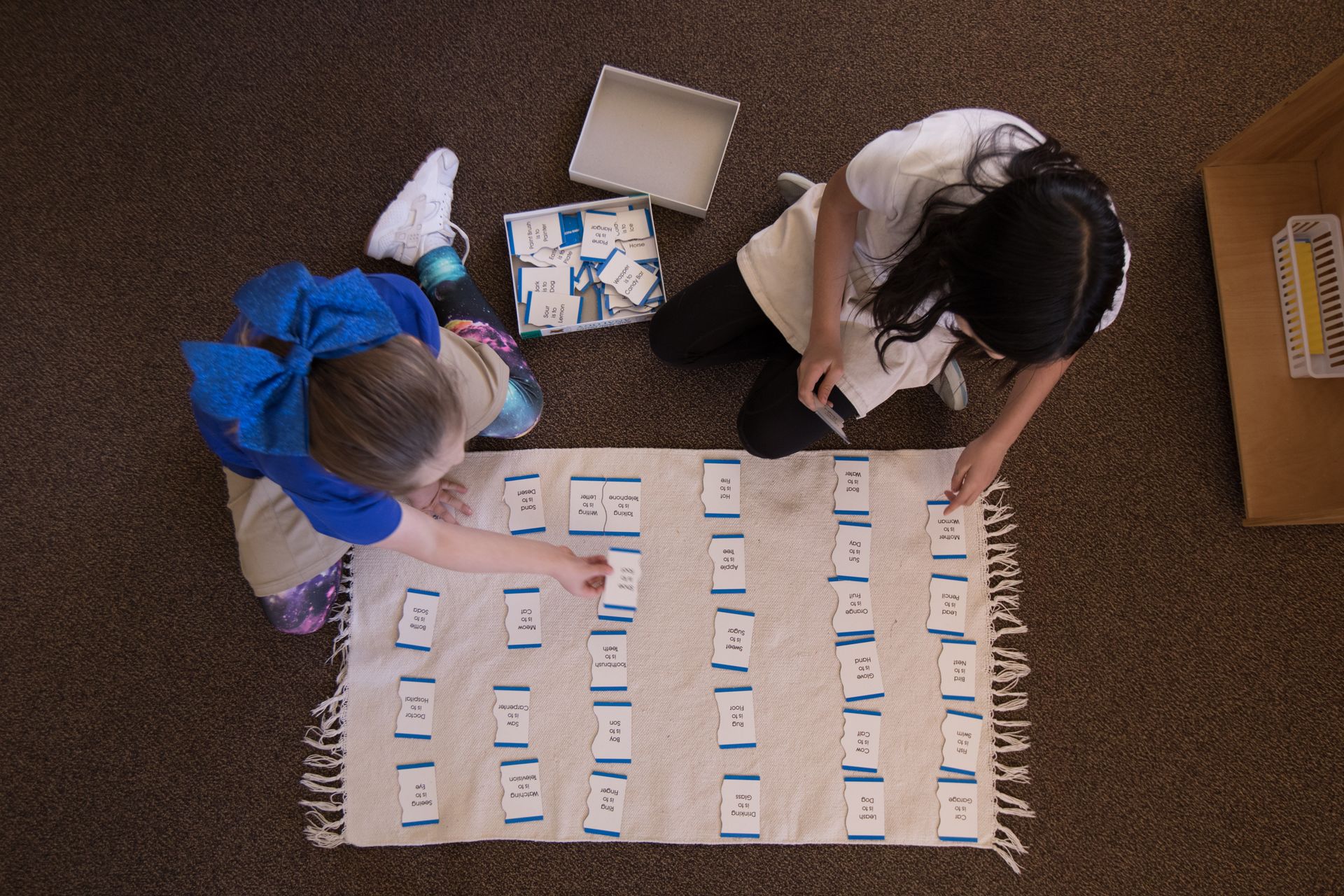
As is often the case with specialized fields, Montessori has its own beautiful, particular vocabulary. If you are new to our community—or transitioning from our Primary environment into the Elementary years—you might hear our guides use terms that sound a bit unfamiliar!
In this edition of our Montessori Dictionary, we are shining a light on a few key terms that apply to the Elementary years and the adolescent journey beyond. To help ground these concepts, we’ve included a few favorite quotes from Dr. Maria Montessori. Dr. Montessori was truly a woman well ahead of her time, and her writings continue to be the daily inspiration for everything we do here at North Shore.
Cosmic Education
“Since it has been seen to be necessary to give so much to the child, let us give him a vision of the whole universe.” – Dr. Maria Montessori, To Educate the Human Potential
Dr. Montessori developed Cosmic Education as the cornerstone educational approach for children in their Elementary years (ages six to twelve). While the Primary child focuses on organizing their immediate physical world, the Elementary child is hungry to understand how the whole world works.
Cosmic Education provides an awareness of the deep interconnectedness of all things. It helps children see that the universe is ordered, governed by natural rules, and incredibly inspiring. Through this curriculum, our students come to understand that all we know, invent, and learn is built upon the great work of the human beings who came before us.
“If the idea of the universe be presented to the child in the right way, it will do more for him than just arouse his interest, for it will create in him admiration and wonder... his intelligence becomes whole and complete because of the vision of the whole that has been presented to him.” – Dr. Maria Montessori, To Educate the Human Potential
Imagination
In the Montessori philosophy, imagination isn't just about fantasy; it is the ultimate tool that allows humans to understand, adapt to, and shape the world.
Imagination is the superpower of the Elementary-aged child. Having spent their early years absorbing concrete, hands-on experiences and sensory impressions, they are now developmental ready to use that foundation to imagine things they cannot physically see—traveling across time, space, and history. Much of our Elementary curriculum intentionally appeals to this brilliant imaginative capacity.
Psycho-Discipline
To understand the term "psycho-discipline," it helps to look at its roots. The prefix psycho relates to the mind or psychology (from the Greek for "breath, soul, and mind"), while discipline refers to a branch of knowledge. Therefore, psycho-discipline means knowledge that is presented in harmony with the natural psychology of the learner.
At North Shore, we always focus first on the whole child. We look at the unique characteristics and needs of each individual and where they are in their developmental stage. Because the lessons meet them exactly where they are psychologically, students naturally engage with and take ownership of their education. The learning process ultimately serves the child's inner self-construction.
“Education should not limit itself to seeking new methods for a mostly arid transmission of knowledge: its aim must be to give the necessary aid to human development.” – Dr. Maria Montessori, From Childhood to Adolescence
Looking Ahead: The Adolescent Years
While North Shore Montessori School lovingly guides children through their foundational early childhood and elementary years, the Montessori journey continues beautifully into adolescence. Dr. Montessori designed specific concepts for the teenager that build directly upon the independence they cultivate in our classrooms today:
- Erdkinder: Meaning "land children," this was Dr. Montessori’s vision for a land-based program where adolescents engage in meaningful work that balances intellectual and physical pursuits—ideally a rural farm school community where they cultivate social and economic independence.
- Occupations: Focused, purposeful, adult-level activities (ranging from beekeeping to bookkeeping) that integrate the mind and body, allowing adolescents to see how their knowledge can make a real, practical impact on the world.
- Plan of Study and Work: A holistic, interdisciplinary program that supports the unique emotional and physical vulnerabilities of teenagers while integrating academics with production, exchange, and community responsibility.
See the Magic in Action
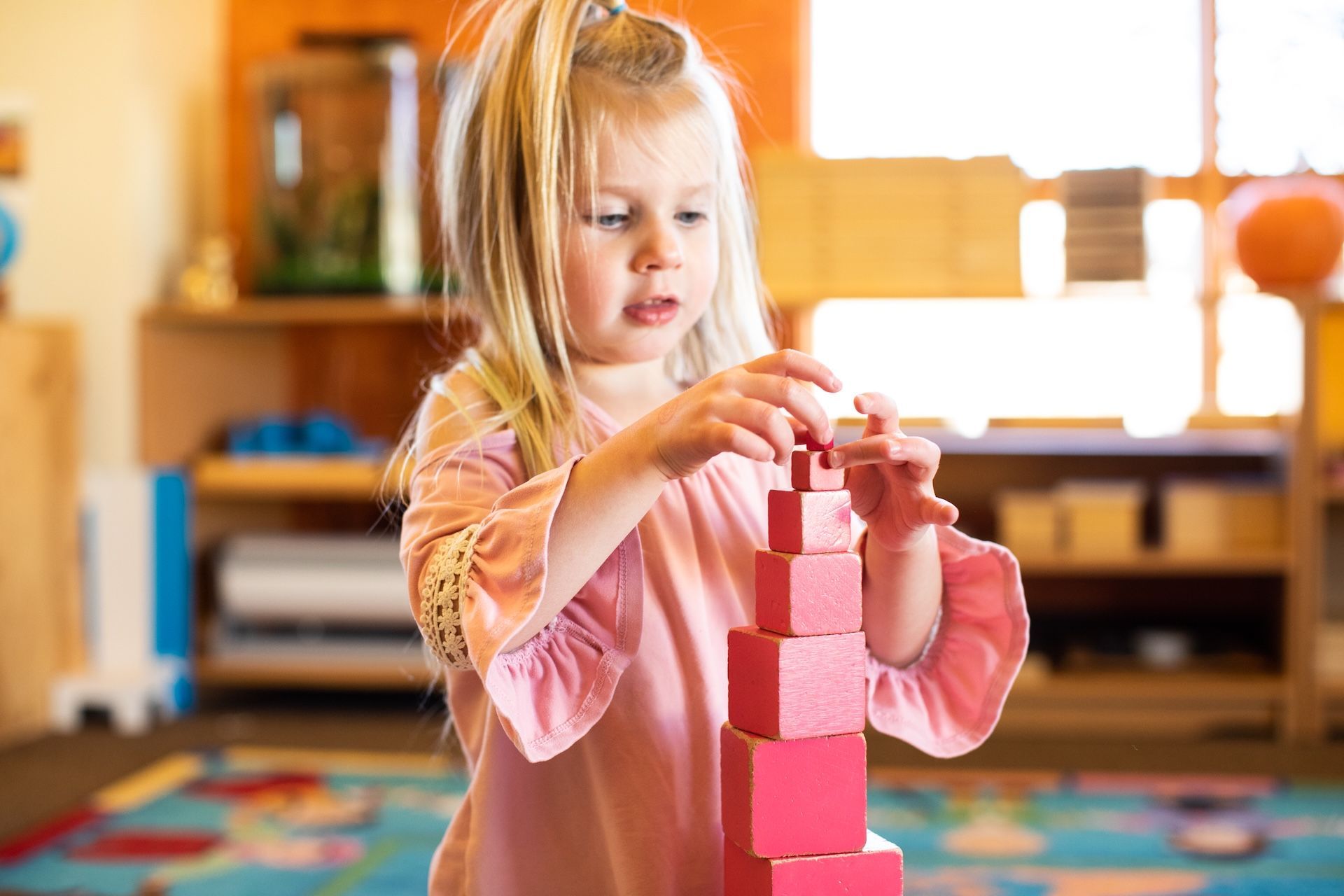
Whether it's a primary child mastering the Pink Tower or an elementary student exploring the history of the universe through Cosmic Education, a Montessori environment is a joyful, calm, and purposeful place to grow.
If you would like to see how Montessori education aids human development, inspires the imagination, and gives children a vision of the whole universe, we invite you to connect with us.
You might also like