The Joy of "I Did It!": Nurturing Intrinsic Motivation at North Shore Montessori
Think back to a time when you immersed yourself in an activity simply because you wanted to—perhaps weeding your garden on a sunny morning, losing yourself in a great book, taking a quiet walk, or rearranging your living room. Your motivation arose entirely from within.
In those moments, you likely felt a quiet sense of satisfaction, joy, or deep focus. You weren't looking for a prize or a round of applause; the act itself felt meaningful. This is the power of intrinsic motivation.
Now, imagine doing those exact same activities, but for external reasons: weeding because you fear a note from the HOA, reading a book solely to answer quiz questions, or walking just to log steps for a workplace challenge. The activity might be identical, but the internal experience feels completely different.
At North Shore Montessori School, we care deeply about how children learn, not just what they learn. A central part of our approach is helping children cultivate their own internal spark rather than relying on external rewards.
Why Intrinsic Motivation Matters in the Classroom
When children act out of internal motivation, three vital experiences take place:
- Autonomy: They learn that they are capable of making choices and guiding their own path.
- Purpose: They see that their efforts have real meaning in their community.
- Mastery: They experience the genuine satisfaction of working through a challenge until they succeed.
When we remove gold stars, sticker charts, and constant adult judgment, children begin to trust themselves. They develop a growth mindset—viewing mistakes not as failures, but as natural steps in learning. Over time, this builds cognitive hardiness: the quiet resilience to try again when something gets tough.
The Unintended Cost of "Good Job!"
Extrinsic motivators are everywhere in childhood—from sticker charts and grades to frequent verbal praise like "Good job!" or "You're so smart!"
While these rewards are almost always offered with love and good intentions, educational research shows that they can actually diminish a child's natural drive over time.
- The Praise Trap: Studies (such as those by researcher Mary Budd Rowe) show that children who are heavily praised often become more hesitant. They may speak in an unsure voice, abandon their ideas when an adult disagrees, or give up sooner on challenging tasks because they are focused on seeking approval rather than solving the problem.
- Shifting the Value: Author Alfie Kohn (Punished by Rewards) points out that when we label a child's behavior with "Good sharing!" or "Good boy!", the focus shifts from the action itself to the adult's reaction. The child begins looking outward for validation rather than inward for satisfaction.
When we step back as adults, we don't rob children of encouragement—we give them space to feel their own pride.
How We Nurture Internal Motivation at NSMS
In our prepared environments, you won't find reward charts or rows of grades. Instead, you will see:
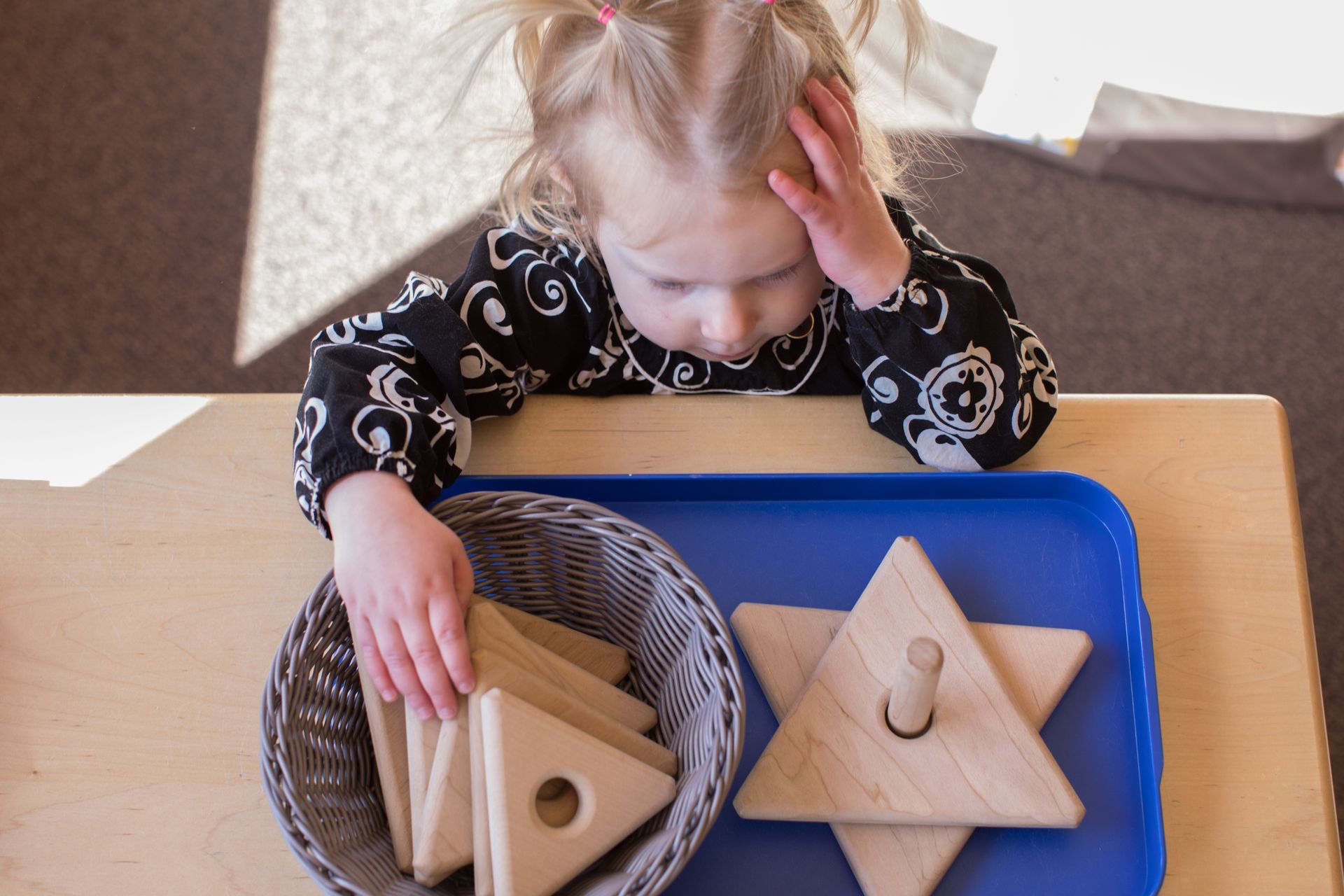
- Self-Correcting Materials: Children know if a puzzle piece fits or a math equation balances without needing an adult to mark it right or wrong. The material itself provides the feedback.
- Encouraging Process Over Product: Instead of saying, "What a beautiful picture!", our guides might say, "I noticed you used bright colors for the sky today," or simply, "You worked on that drawing for a long time."
- Real, Meaningful Work: From pouring their own water to mastering long division, children engage in practical and academic work that carries its own natural sense of accomplishment.
Bringing It Home: A Simple Shift in Words
Instead of offering automated external praise like "Good job cleaning up your shoes," parents can acknowledge the real-world impact of a child's contribution by saying, "Thank you for putting your shoes away. It makes our hallway safe and clear."
Similarly, replacing evaluative praise like "You're such a good drawer!" with process-focused observations like "You spent a lot of time on that painting! Tell me about this part here," encourages reflection without judgment. Finally, rather than centering the adult's emotional reaction with "I'm so proud of you for fixing that!", guiding the child to connect with their own sense of accomplishment by asking "You tried three different ways until it worked! How does it feel to finish it?" fosters deep internal satisfaction and resilience.
See Intrinsic Motivation in Action
When children learn for the joy of discovery rather than the promise of a treat or a grade, they build a foundation for lifelong confidence and resilience. They work hard because it feels good to grow.
We invite you to step into our classrooms and observe this in real time. Watch how our students choose their work, concentrate deeply, and beam with quiet pride when they master a new skill.
Curious to see what this looks like in our community?
Schedule a tour and see North Shore Montessori School in action!
You might also like