
Reimagining “Chores”: How Everyday Contributions Build Capable, Confident Children
Chores. The word itself often comes with a bit of a heavy sigh.
Do you remember doing chores growing up? For some of us, they were assigned as a negative consequence. For others, we weren't expected to help out, and we had to figure out household management as adults. Still others remember pitching in as a natural, easy part of family life.
In the end, it all comes down to how we frame it.
How we present the concept of contributing at home makes all the difference. Having children pitch in isn’t just helpful for the household (even if it takes a little extra patience and time on our end at first)—it is deeply beneficial for them, too!
Why Family Contributions Matter (The Montessori Way)
In the Montessori classroom, we don't call everyday tasks "chores"—we call them Practical Life. These meaningful activities are carefully woven into your child’s day because they satisfy a deep developmental need.
When you bring this mindset into your home, you offer your child several beautiful gifts:
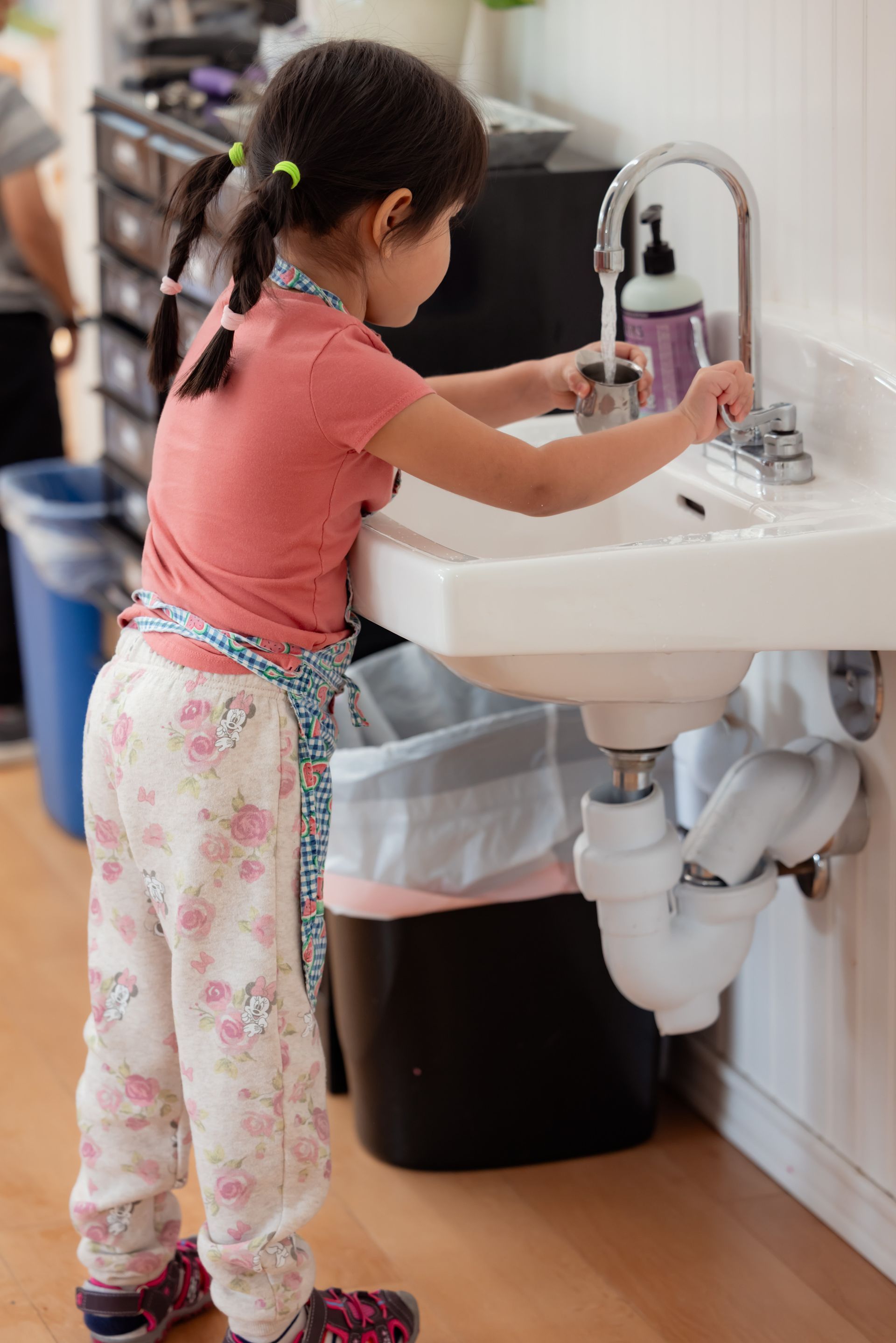
- Developing True Independence: Children have an innate desire to "do it myself." Mastering a real-world task—like pouring a drink or folding a towel—feels incredibly empowering.
- Fostering Belonging & Purpose: When children contribute to maintaining their home, they receive a clear message: You are an important, capable member of this family, and we rely on each other. Working side by side to tidy up also creates sweet, connection-filled moments together.
- Building Essential Life Skills: Just as children need patient guidance when learning to read or add, they need the same gentle demonstration for basic life skills. When we slow down, get on their level, and show them how to care for their environment, we set them up for a lifetime of confidence.
Practical Ideas for Every Stage
Children are capable of so much when given real responsibility, child-sized tools, and a little extra time. Here are some Montessori-aligned ways your child can contribute, broken down by developmental stage.
A Quick Reminder: Think of this list as a menu of inspiration rather than a checklist. Choose one or two small habits to introduce at a time!
Toddlers (18 Months – 3 Years)
Even our youngest children have a strong desire to participate in real work. Keep tasks simple and offer tools that fit their small hands.
- Crumb Sweeping: On the floor near the dining table, use painter’s tape to mark a small square. Show your child how to use a small dustpan and hand-broom to sweep crumbs into the square.
- Table Setting: Keep a low basket with cloth napkins. Show your toddler how to place one napkin at each seat. (Resist the urge to fix their placement right away—celebrate their effort!)
- Restocking & Sorting: Involve them in putting their own shoes on a low rack or placing dirty clothes into a laundry hamper.
- Care of the Environment: Offer a small, damp sponge so they can wipe up their own spills or wipe off a low shelf.
Children's House (Ages 3 – 6)
At this age, children are eager collaborators. They love order, repetition, and feeling "big."
- Table Care: Show them how to brush crumbs off the table using a small brush, then wash the surface with a small bucket of warm water, a well-wrung sponge, and a dry cloth.
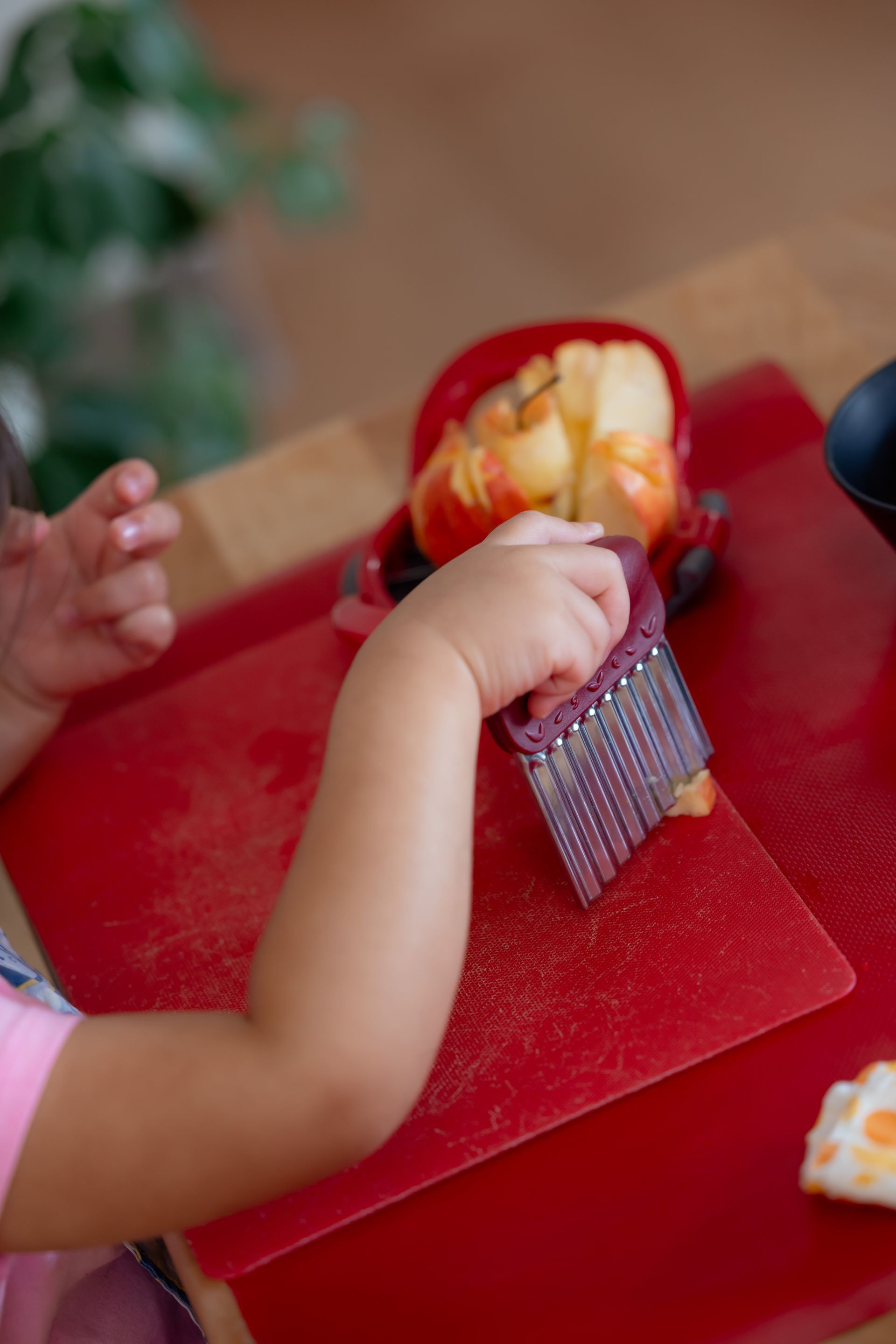
- Food Preparation: Let them help pack their own lunchbox, slice soft fruits (like bananas) with a child-safe wave cutter, or pour their own water from a small pitcher.
- Care of Plants & Animals: Teach them how to check if a houseplant needs water using their finger, or let them scoop dry food for a family pet.
- Self-Care & Dressing: Invite them to select their own weather-appropriate clothing and lay it out. Be prepared for some fun, creative outfit combinations—and embrace their blossoming sense of self!
Lower Elementary (Ages 6 – 9)
As children grow, their physical capability expands significantly. Building these tasks into predictable daily routines helps keep motivation steady.
- Laundry Care: Start small by teaching them to fold washcloths, napkins, or socks. As they gain confidence, they can learn to fold their own shirts and put their clothes away in low drawers.
- Kitchen Contributions: Show them how to safely load and unload the dishwasher, wash non-breakable dishes by hand, or prepare simple snacks from start to finish.
- Deep Cleaning Tasks: Tasks that adults might find tedious—like dusting baseboards, polishing wooden furniture, or vacuuming a rug—are often deeply satisfying for children this age because they involve big, active movements.
Upper Elementary (Ages 9 – 12)
Older children are ready for complex, multi-step responsibilities. Frame new tasks as a natural reflection of their growing maturity and independence.
- Meal Planning & Prep: Invite them to choose a family dinner recipe, create the grocery list for it, and prepare the meal with your supervision.
- Pet Care & Outdoor Work: Give them ownership over daily pet walks, feeding schedules, or tending to a home garden or outdoor yard space.
- Personal Space Management: Teach them how to strip their bed linens, run a load of laundry independently, and keep their personal belongings organized.
Finding the Balance
When inviting your child to contribute at home, the key is connection over perfection.
Practical life work is wonderful for a child’s development, but so is unstructured play, rest, reading, and simple family downtime. Start small, model tasks with patience, and celebrate the effort rather than focusing on a picture-perfect result.
Interested in seeing how practical life skills are integrated into our daily classroom environments? We’d love to welcome you for a visit.
Schedule a tour and learn more about our community.
You might also like