The Architecture of Childhood: Understanding Human Tendencies at North Shore
When Dr. Maria Montessori was observing children’s development, she wasn’t just focused on how they learn traditional academic subjects. She was profoundly curious about the deep-seated drives, instincts, and behavioral patterns that have shaped human beings across time.
Dr. Montessori referred to these universal forces as the Human Tendencies. They are the evolutionary blueprints that have guided our species since the very beginning, helping us adapt, survive, and thrive. When we recognize these tendencies in our children, we can stop fighting against human nature and instead build home and school environments that flow directly with it.
Here’s a closer look at these universal human tendencies, and how they show up in both human history and our children’s daily lives.
Orientation
At its root, orientation literally means "turning toward the east and the rising sun." For early humans, orientation meant survival—knowing where to find water, tracking migration paths, or reading the stars to navigate.
As adults, we still crave orientation when we move to a new town, start a new job, or even walk into an unfamiliar grocery store. We naturally look for signs, maps, and familiar rhythms to help settle our nervous systems.
Children have an even greater developmental need for orientation. The way they are welcomed on their first day at North Shore, knowing exactly where their cubby is, and having daily routines they can count on all provide a deep sense of psychological safety. Even a predictable bedtime ritual, knowing which shelf holds their favorite books, or how breakfast is served each morning helps a child map their world and feel secure.
Exploration
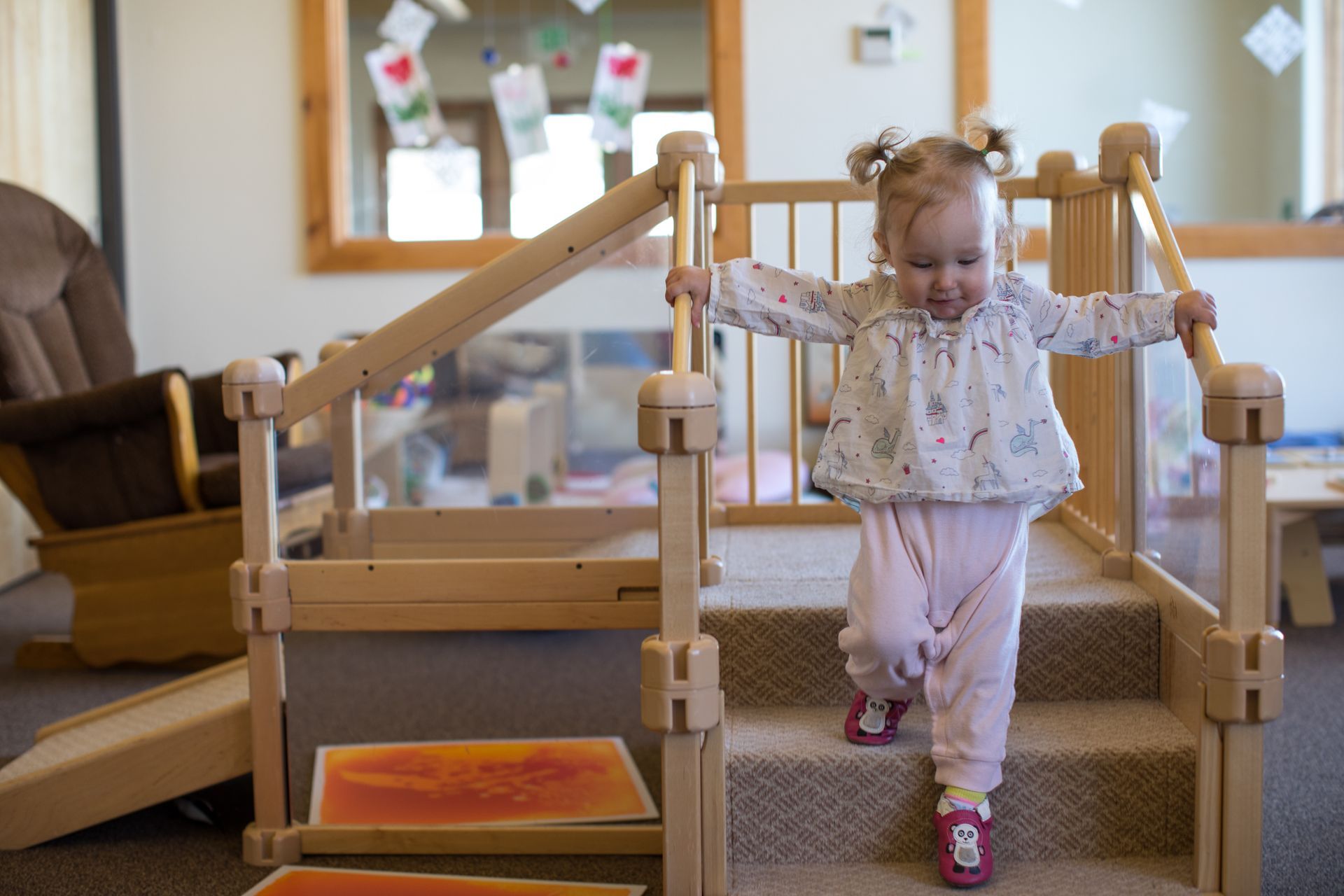
From the moment we are born, we explore. Infants use their mouths and hands to understand objects; toddlers climb stairs like they are scaling mountains; older children explore through research, imagination, and deep dives into history and science.
Exploration is how humans pushed across continents, discovered agriculture, crossed oceans, and reached the stars. Our curiosity is unquenchable. Our prepared environments honor this by giving children real, uninterrupted opportunities to investigate the world—whether that means a Primary child exploring the textures of the sensorial materials, or an Elementary student researching life in the Carboniferous period. At home, you see this when your child turns over rocks in the backyard or takes apart a broken toy to see how the gears work.
Order
We all know the immediate sense of relief that comes from an organized workspace or a well-structured calendar. Order helps us make sense of life. For early humans, ordering the world—classifying what was safe versus dangerous, or edible versus poisonous—ensured the survival of the community.
Young children have an intense, internal need for physical order. Anyone who has witnessed a toddler melt down because a routine was done "out of order" knows this need is real. Our Primary classrooms respect this sensitive period by offering precise, beautifully organized environments where every single material has a designated, predictable home.
By the Elementary years, this need for order shifts from the physical into the mental realm. Children now want to classify animals, chart types of landforms, and debate social rules. They are ordering ideas, logic, and morality. At home, you’ll notice this when they begin organizing complex collections or passionately arguing about fairness.
Self-Control
Self-control has always been a cornerstone of human cooperation. Early hunters had to move in absolute silence, and tribes relied on shared rules to survive. Today, executive functioning and self-regulation remain some of the greatest predictors of lifelong fulfillment.
In a Montessori environment, self-control isn't enforced from the outside through rewards or punishments; it grows naturally from within. Children practice waiting for a material to become available, choosing the right moment to speak, and navigating social courtesies. When a child finds deep concentration in meaningful work, inner discipline naturally blossoms.
Imagination
Imagination isn’t just for artists—it is a vital human tool. It is what allowed early humans to picture a tool before it was ever knapped from stone, or to dream up stories around a fire to pass down wisdom.
For children, imagination expands exponentially around age six. Suddenly, they aren't just absorbing the immediate concrete world; they are imagining other worlds, ancient civilizations, outer space, and microscopic atoms. Our Elementary curriculum taps into this by giving children the universe itself as their framework. At home, this drive unfolds through elaborate pretend play, story writing, and inventing new games.
Abstraction
Abstraction is the ability to pull a conceptual idea away from a physical experience. Early humans did this when they drew symbols on cave walls to represent real animals. Today, we live in a world built entirely on abstractions: mathematics, laws, and the concepts of justice and freedom.
Children naturally move toward abstraction, but only after they have been fully grounded in hands-on, concrete experiences. Montessori materials are masterfully designed as "materialized abstractions," allowing children to literally hold a mathematical or grammatical concept in their hands before they are asked to hold it in their minds.
Activity, Work, and Movement
Humans are inherently doers. From stone tools to skyscrapers, everything we know about human history comes from the physical work left behind. Dr. Montessori beautifully believed, echoing the poet Kahlil Gibran, that "work is love made visible."
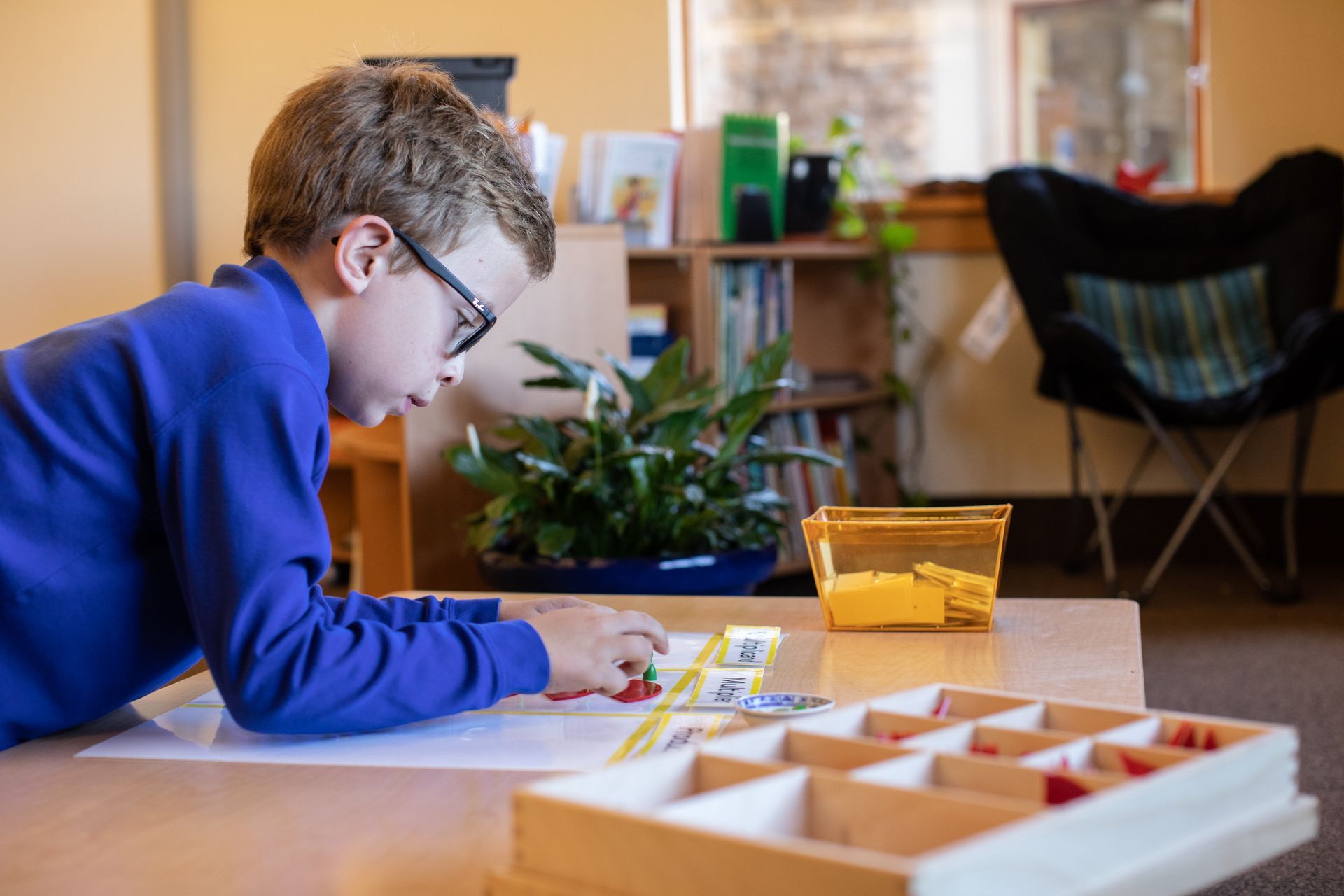
For children, purposeful activity isn’t drudgery—it is pure joy. Whether they are scrubbing a table, building massive math equations, or researching volcanoes, children construct themselves through activity. Physical movement is not a distraction from learning; it is the very pathway into it. This is why children are so eager to help bake, sweep, carry groceries, or build forts at home.
Repetition
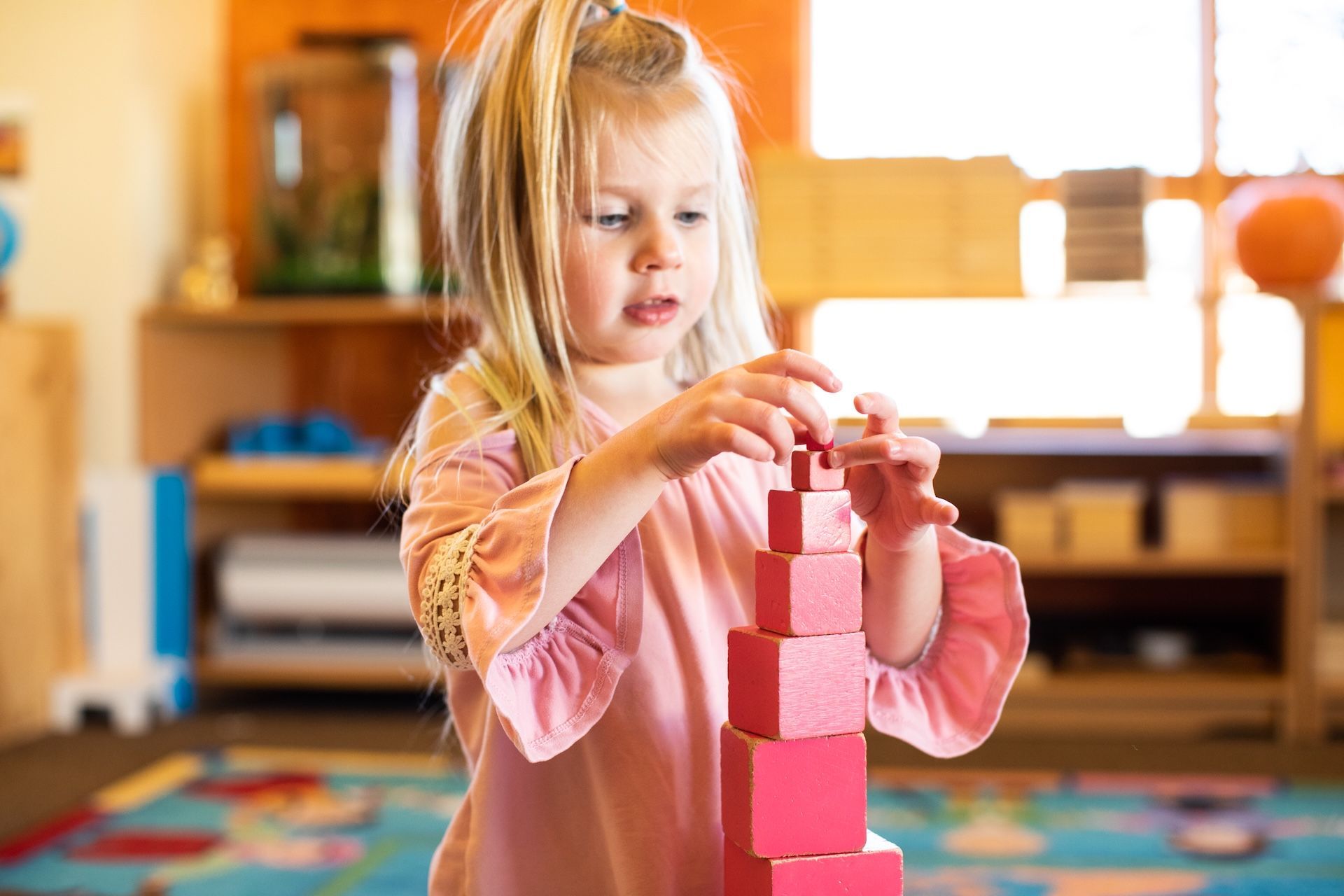
Watch a Primary student stack the Pink Tower over and over, or repeat a pouring exercise forty times in a row. Repetition is how young children refine their movements and achieve a deep sense of neurological mastery.
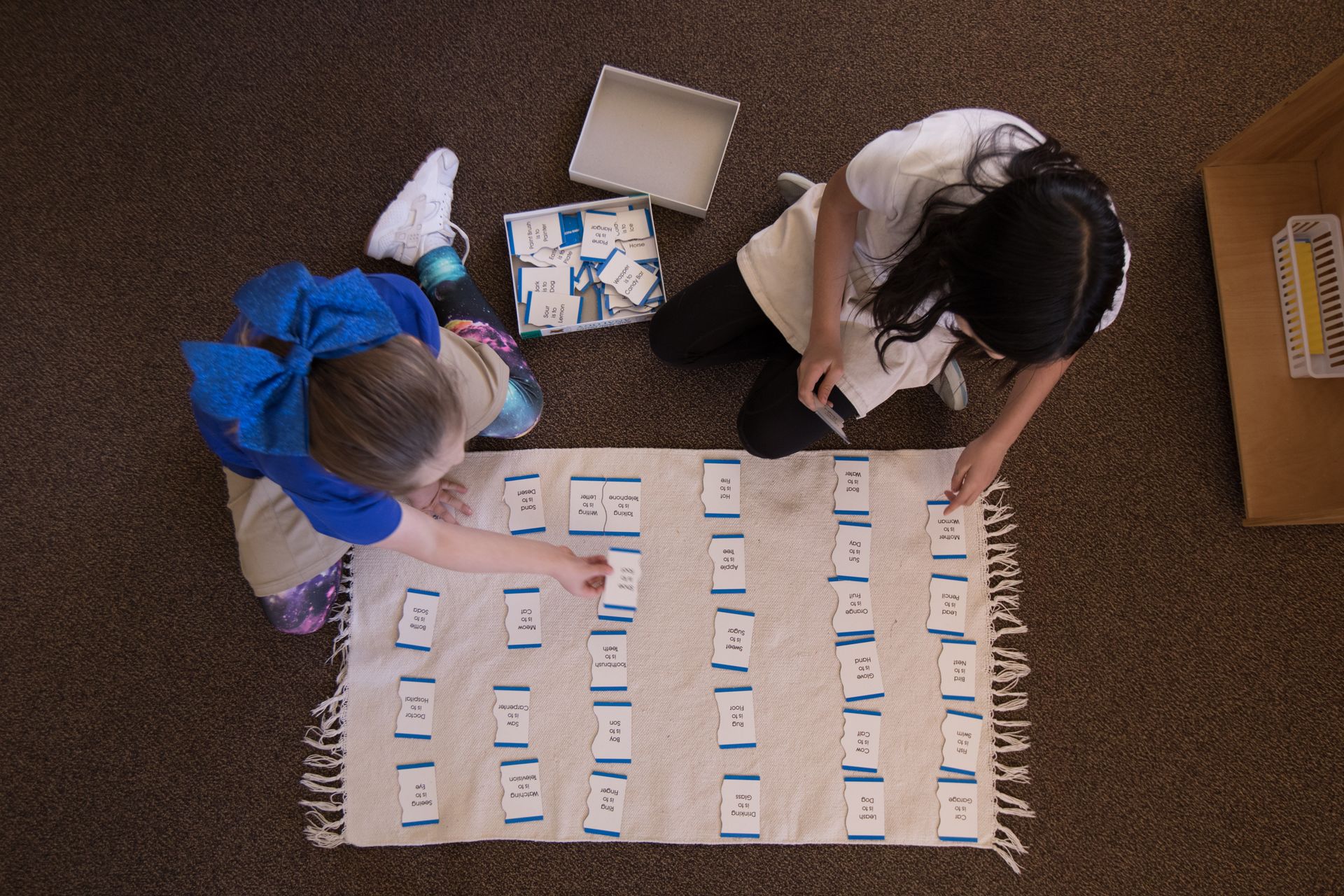
Older children still repeat, but their repetition looks different. They elaborate and push concepts further. Instead of practicing small math facts, an Elementary student might choose to solve a giant multiplication problem that stretches across the classroom floor, purely for the thrill of the challenge.
Exactness and Self-Perfection
Humans have always possessed a drive for exactness, whether building a stable bridge or crafting a precise calendar. Children share this exact drive. They beam with pride when their handwriting is precise, or when a puzzle fits together perfectly.
Closely linked to exactness is the tendency toward self-perfection. Children don’t just want to complete a task; they want to do it well. You see this when a toddler insists on re-zipping their coat until it's just right, or when an Elementary student wrestles with big moral questions to find the most just solution.
Communication and Belonging
At the heart of the human experience is our need to connect. Communication—through language, art, and music—is how we share knowledge across generations. Belonging is what makes us whole; we naturally organize ourselves into families, communities, and tribes.
Our students live these tendencies out loud. They talk endlessly, share secrets, create clubs, and invent elaborate social games. Classroom rituals, shared community meals, and collaborative projects all serve this deep human need to know that they are valued, essential members of a group.
Why Understanding This Changes Everything
These human tendencies remind us that true education isn't about filling a child's head with isolated facts. It is about preparing a supportive space for what is already inside them to unfold.
When Dr. Montessori said we should "follow the child," she did not mean letting them wander aimlessly. She meant we must pay close attention to these deep, universal human drives and carefully prepare an environment where those drives can manifest in beautiful, constructive ways.
When a child's natural tendencies are honored, they don't just achieve academic success. They grow into grounded, confident individuals who know how to orient themselves in a changing world, explore with curiosity, build with order, and belong with others in peace.
We invite you to visit North Shore Montessori School to see how our prepared environments beautifully honor these natural human tendencies, allowing children to flourish from the very beginning. Connect with us today to schedule a tour of our campus.
You might also like