The Lost Art of Beautiful Writing: Why Cursive Flourishes in Montessori
It is no secret that traditional handwriting instruction has been gradually disappearing from classrooms across the country. As educational trends shift toward digital keyboards and screen-based assessments, fewer children are given the time to develop fluid, comfortable handwriting.
For many parents, the thought of cursive becoming an obsolete skill is disheartening. Handwriting is more than just a mechanical task—it is a deeply personal form of expression, communication, and cognitive connection.
The good news? At North Shore Montessori School, handwriting never left.
For over a century, the Montessori approach has guided children to write joyfully, fluently, and beautifully. Here is a look at how our prepared environments naturally guide children into the art of handwriting from their earliest years.
1. Indirect Preparation: Building the Hand Before the Pencil
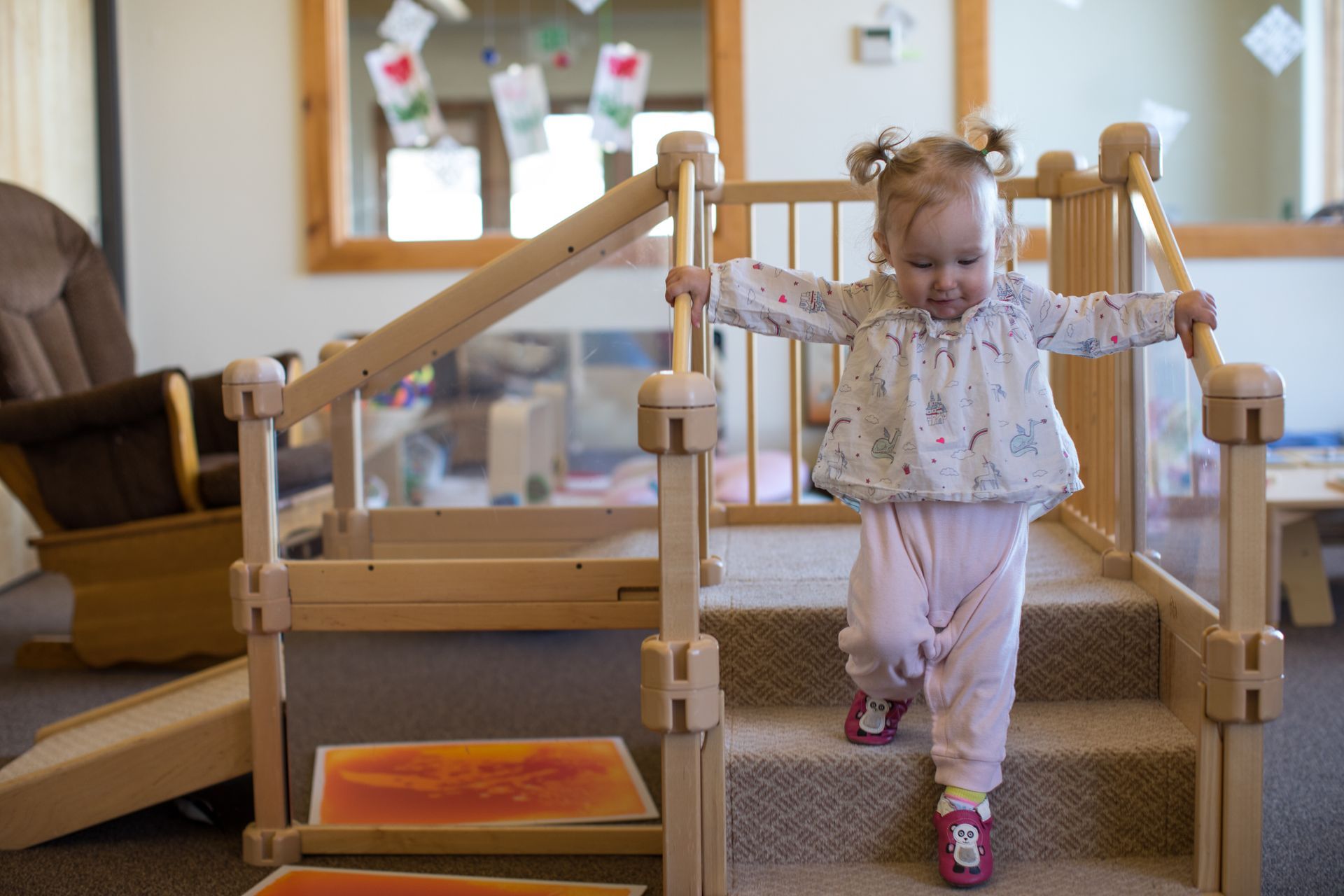
If you step into our Prima (toddler) or Primary classrooms, you will see young children deeply engaged in activities that look like pure play—pouring water, scrubbing tables, using tongs, and manipulating wooden puzzles.
Every single one of these Practical Life and Sensorial activities serves a hidden purpose: indirect preparation for writing.
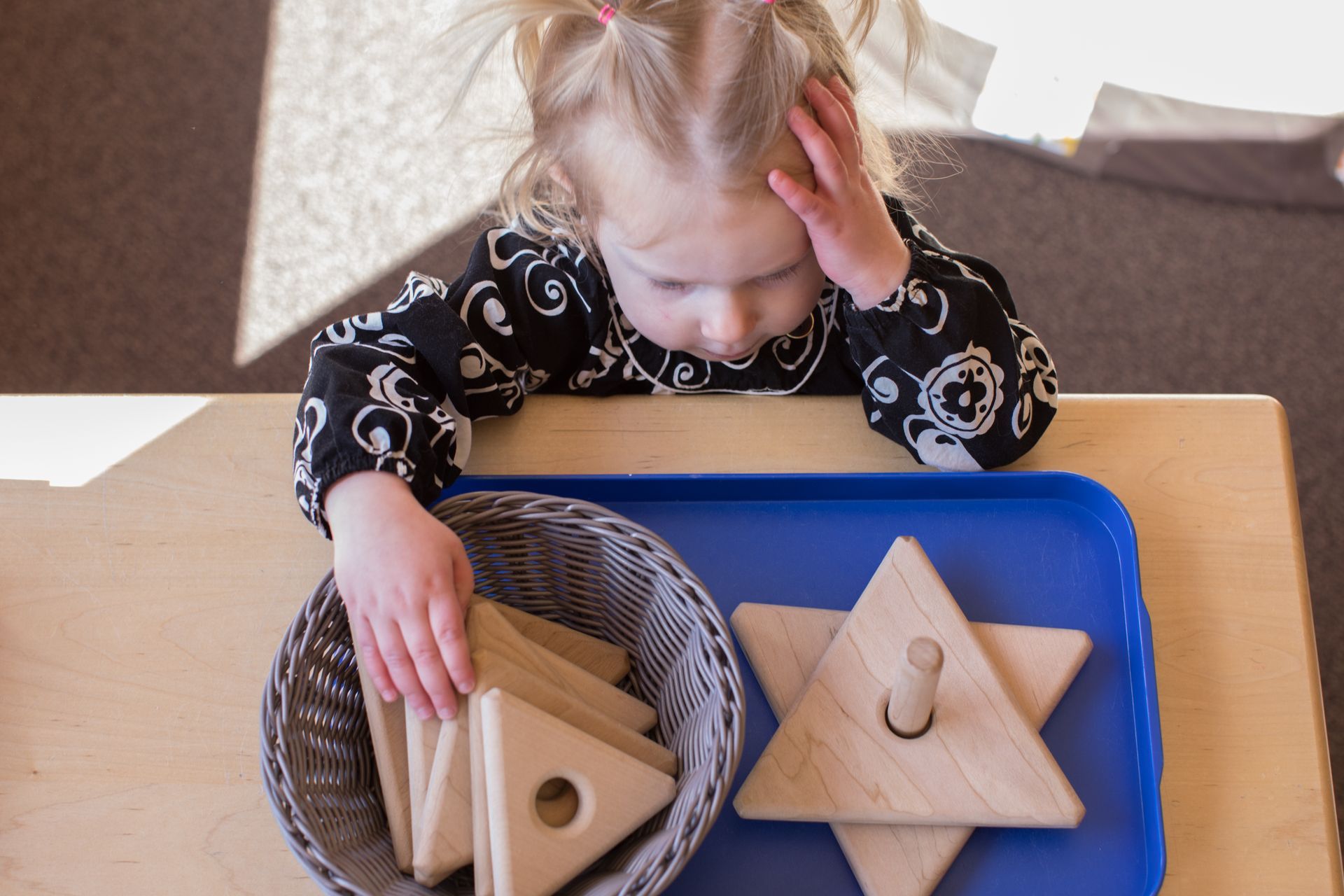
- The Pincer Grip: Each time a three-year-old lifts a knobbed cylinder block by its small wooden handle, they are strengthening the exact three-finger grip needed to hold a pencil.
- Left-to-Right Tracking: From washing a table to arranging color tablets, materials are always placed and used from left to right. This subtle repetition prepares the brain and eyes for reading and writing directionality.
By the time a child is handed a pencil, their hand muscles are already strong, coordinated, and ready.
2. Refining Control: The Metal Insets
Long before writing full sentences, Primary students work with the Metal Insets—a series of geometric shapes set in metal frames.
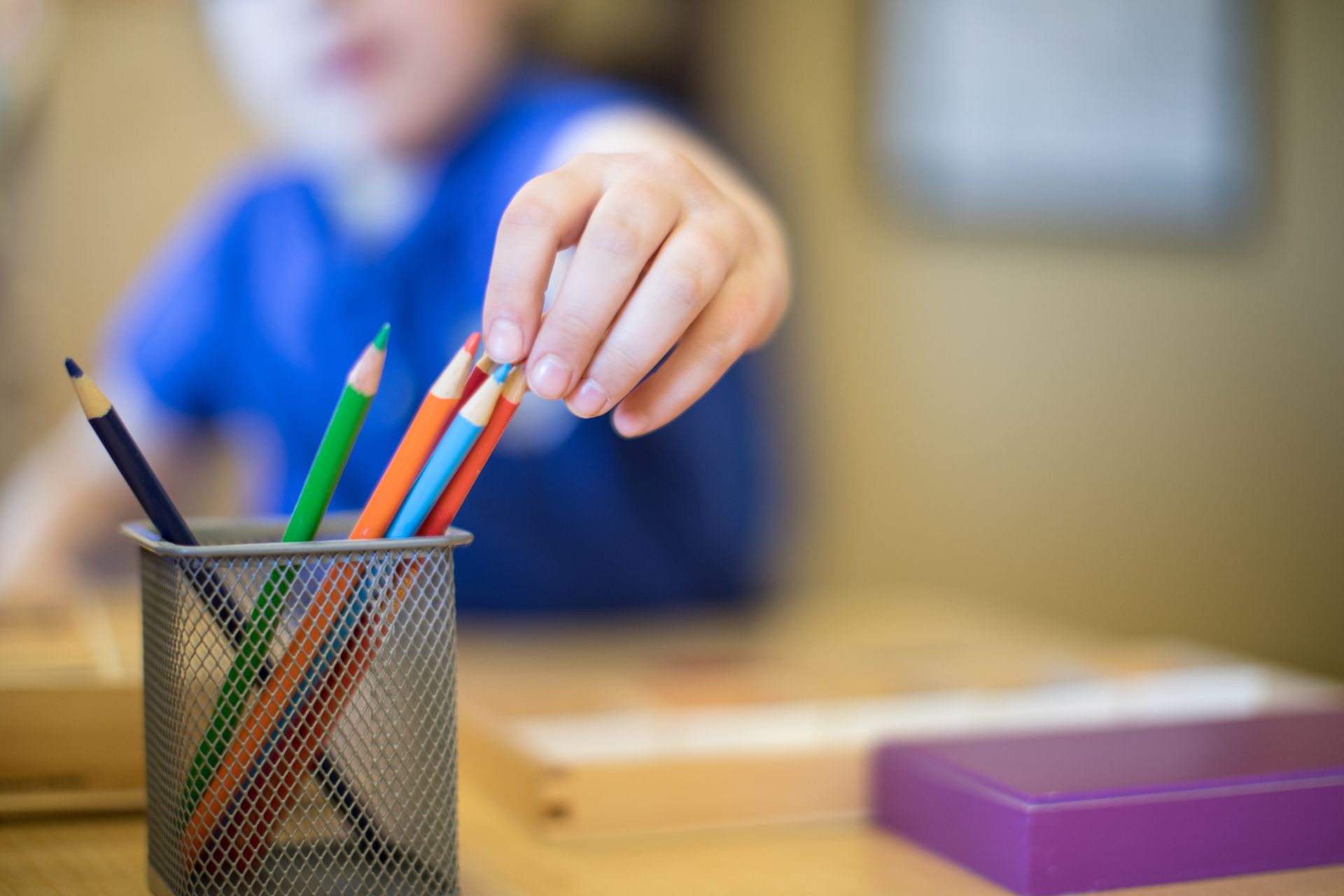
While they look like an early geometry lesson, their primary goal is pencil mastery. Children trace the shapes and fill them in using colored pencils, experimenting with smooth parallel lines, varying pressure, and delicate border control. Through this artistic work, children build the muscular stamina and fine motor control required for continuous writing—all without the pressure of spelling or letter formation.
3. Tactile Letter Formation: Sandpaper Letters
Montessori children learn letters through touch and sound before they ever write them on paper.
Using the Sandpaper Letters—smooth wooden tiles with textured sandpaper letter shapes—children trace the letter with their index and middle fingers while hearing its phonetic sound. This multi-sensory experience connects the physical feeling of the movement with the sound of the letter.
Children also practice tracing letters in small trays of sand, offering a tactile, low-pressure way to refine letter shapes before picking up a pen or pencil.
4. Why We Teach Cursive First
Visitors are often surprised to see 4- and 5-year-olds in our Primary community fluently writing in cursive. We intentionally introduce cursive first because it aligns naturally with a child's physical movement and cognitive development:
- Natural Flow: Cursive follows the fluid, sweeping arm movements natural to young children, unlike the constant stopping and lifting required for manuscript print.
- Fewer Letter Reversals: Because letters like 'b' and 'd' have distinct movement paths in cursive, classic letter reversals almost completely disappear.
- Clear Word Boundaries: In cursive, entire words are connected as single units. The spaces between words become obvious, helping early readers visualize word structures.
- Print Transfer: Children who learn cursive can read print easily, whereas print-only writers often struggle to decode cursive text.
5. Elementary Mastery & Lifelong Pride
As students transition into our Elementary community, handwriting becomes an everyday tool for research, creative writing, and work reflection. Guides review letter formation and help children refine their personal style. Students keep dedicated journals and take immense personal pride in the elegance and clarity of their recorded work.
While our elementary students do learn keyboarding and digital literacy, it is built upon a firm foundation of physical penmanship.
A Gift for a Fast-Paced World
In a fast-moving, digital world, there is immense value in slowing down to craft a handwritten note, journal entry, or letter. At North Shore Montessori School, we are proud to give children the time, tools, and respect needed to master this lifelong skill.
Would you like to see how our students write with joy and confidence? We invite you to
schedule a classroom observation to see Montessori writing in action!
You might also like